Ref. Report: Omega Seamaster 300
I’d like to begin this year with a new series of weekly blogs: Ref Report. This series will highlight a specific watch we have in stock each week, focusing on its history, features, or condition. There is always something to talk about and share — it might be a humble Seiko chronograph or something far more special, like a complicated piece. You never know what will walk into the shop, and that’s what makes it fun. At BolderVintage we don’t discriminate — we buy everything from vintage Seiko to special Patek Philippe and Audemars Piguet.
We’re starting with a Seamaster 300 from 1967, an example featuring an unpolished case and a very attractive tritium matte dial. This one is ref. 166.024, with a date window and a quick-set movement, the cal. 565. While I generally prefer no-date watches, the date function is quite practical for daily wear. This is the first time I’ve had a Seamaster 300 in stock, although I’ve always admired the design and heritage of the model. Omega may be slightly undervalued in the current market, particularly compared to the popularity of other solid gold dress watches, but that doesn’t take away from the fact that Omega remains one of the most complete brands in the watch world. They excelled in chronographs, most notably the Speedmaster; in dress watches, through the Constellation lineup; and of course, their Seamaster divers are highly respected and collected. This particular example was found in Guatemala and is in excellent original condition.
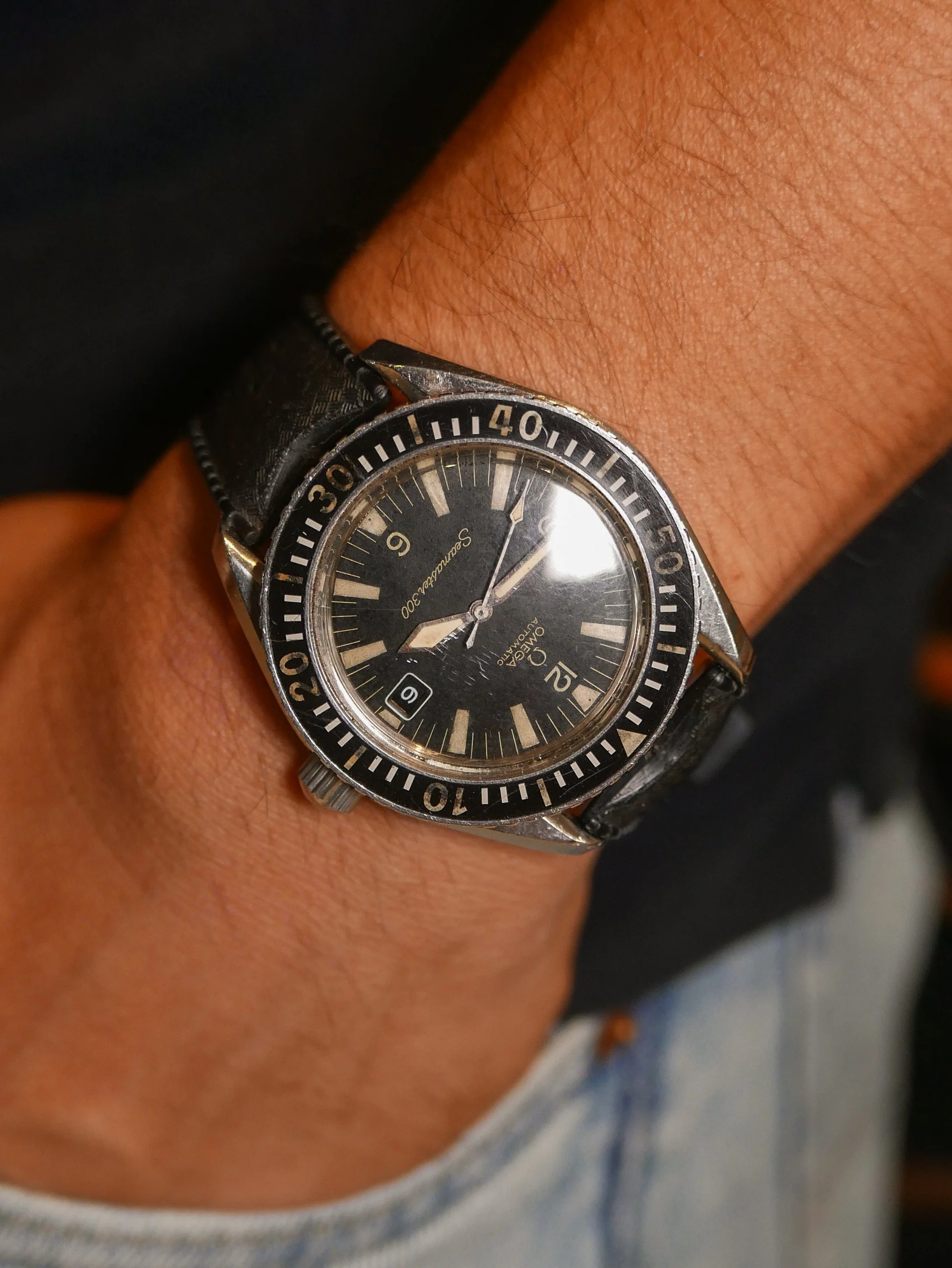
Omega Seamaster 300 on a period correct Tropic strap
Let’s go through some key details about the model. The Seamaster 300 has a rich history of variations. There are multiple dial layouts, hand styles, bezel fonts, case suppliers, and movements that appeared throughout its production. The model was originally launched in 1957 alongside the Speedmaster and Railmaster. It was worn and tested by COMEX (Compagnie Maritime d’Expertises), chosen for its waterproofness and high legibility. The bakelite bezels varied in font and thickness; they were essentially resin filled with luminous material at the center triangle and sometimes at the minute markers. Period advertisements show the Seamaster 300 being sold on a tropic strap or a bracelet. Early examples came with the NAIAD crown logo, which indicated resistance against magnetism, pressure, and moisture. The term “Naiad” comes from Greek mythology, referring to water spirits. From 1968 onwards, the crown changed to a screw-down type without the Naiad emblem.
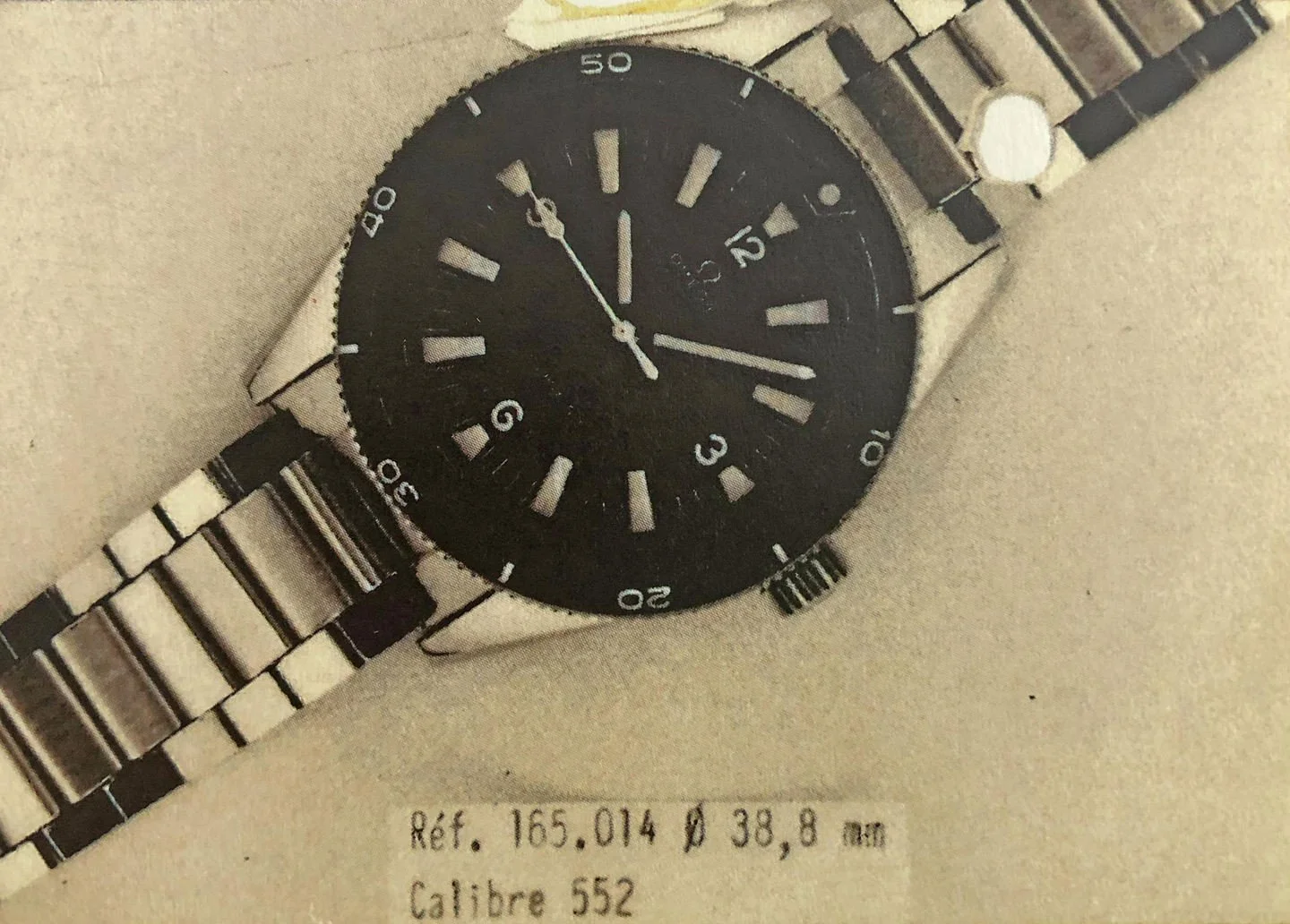
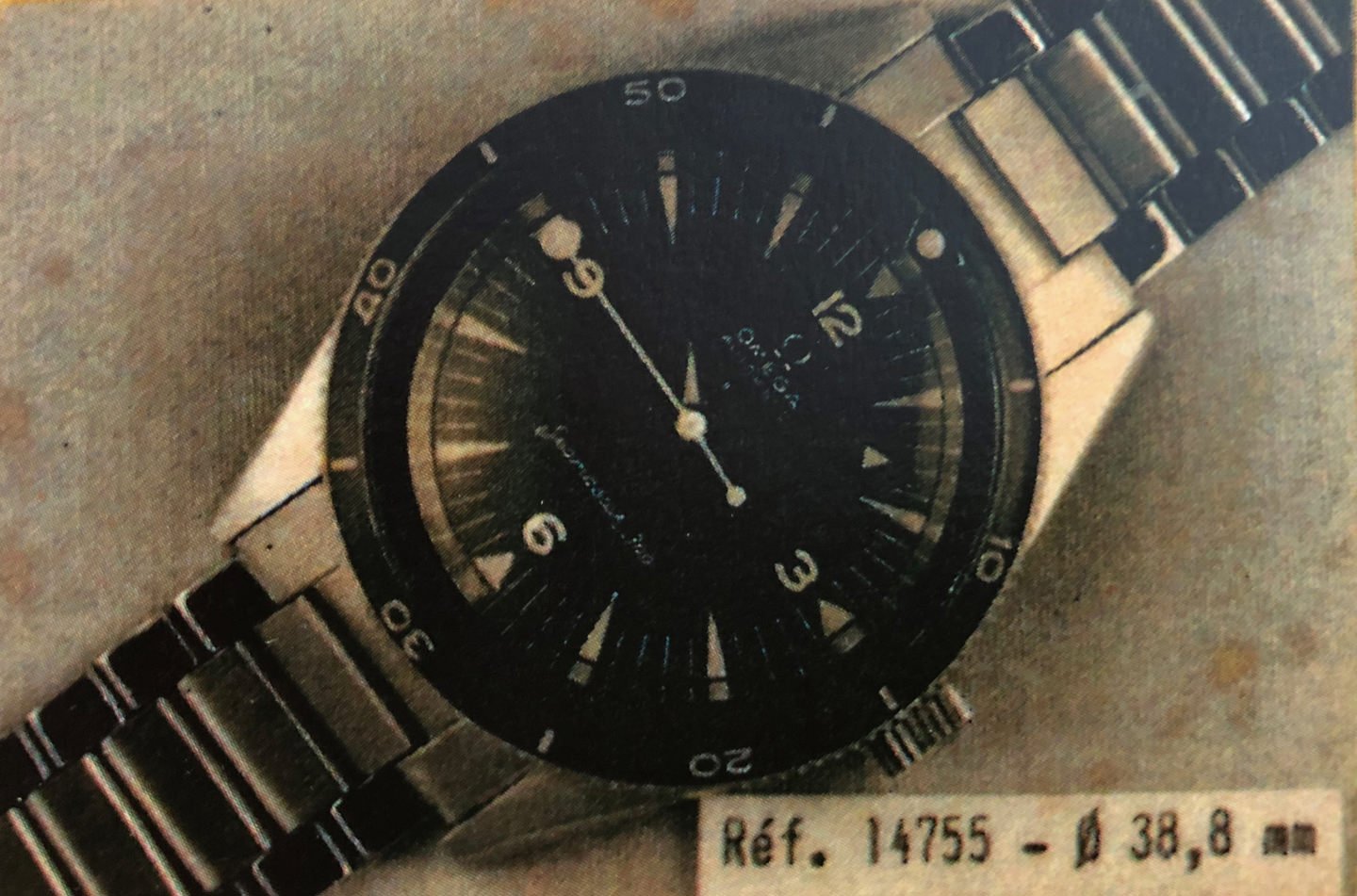
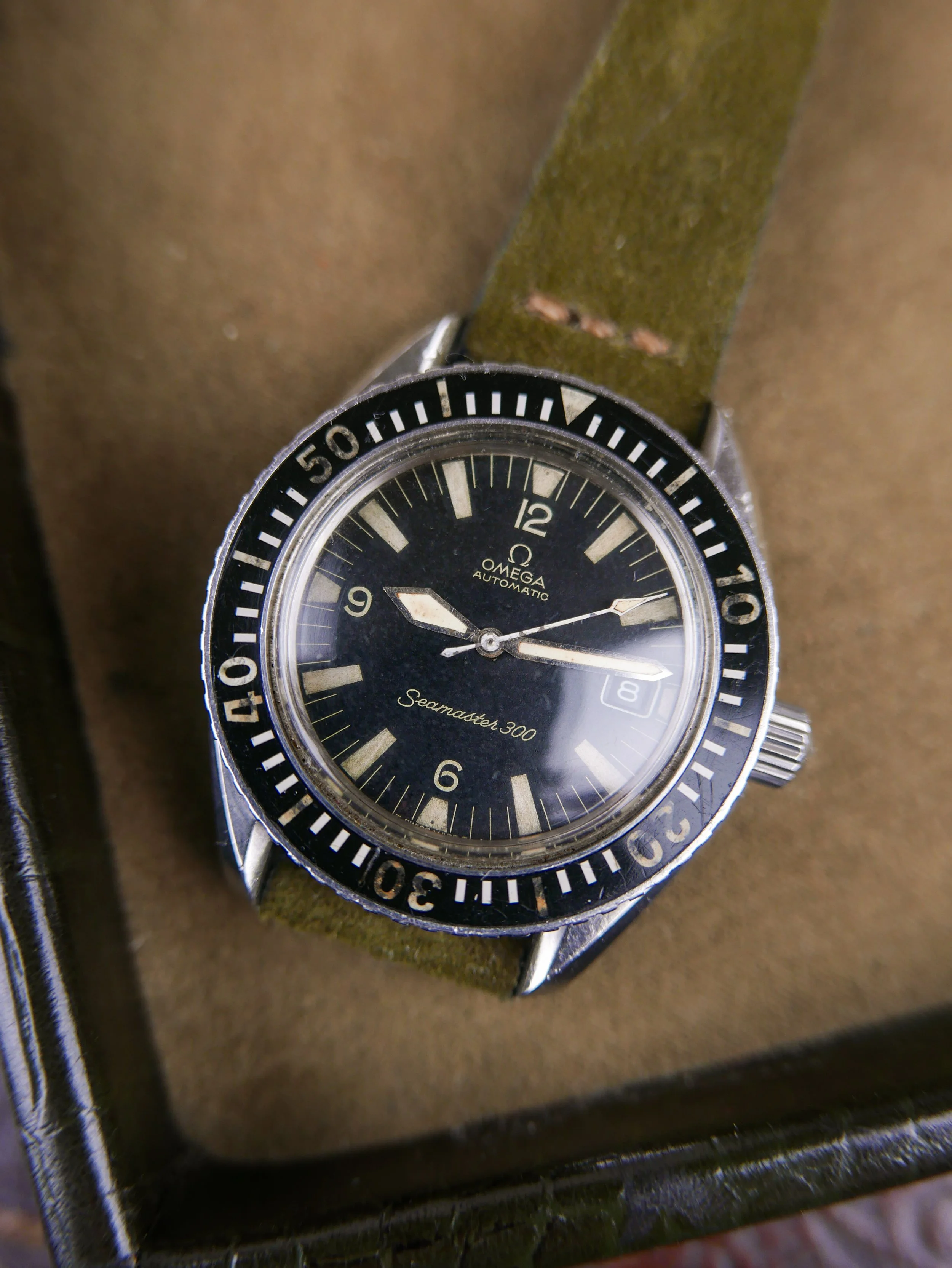
There were two case manufacturers: HF (Huguenin S.A. in Le Locle) in the earlier years and CB (Fabrique Centrale SA in Bienne) later on. The dial variations include the big triangle with date, small triangle with date, no-date small triangle, and small triangle with date. The big triangle dials are especially sought after by collectors. Overall, this is one of the coolest divers produced in the 1960s. The design has tremendous depth and character. The 41mm case wears beautifully, with a lug-to-lug length of 43mm and a thickness of just 12.5mm, which is quite slim for a professional diver with an automatic movement. The twisted lugs give the watch a unique and striking profile. The sword hands are bold and heavily luminous, contributing to excellent underwater visibility and giving the watch an undeniably cool aesthetic. The hour markers are also strongly shaped, and the bakelite bezel reflects light while the matte dial absorbs it, creating a dynamic contrast.
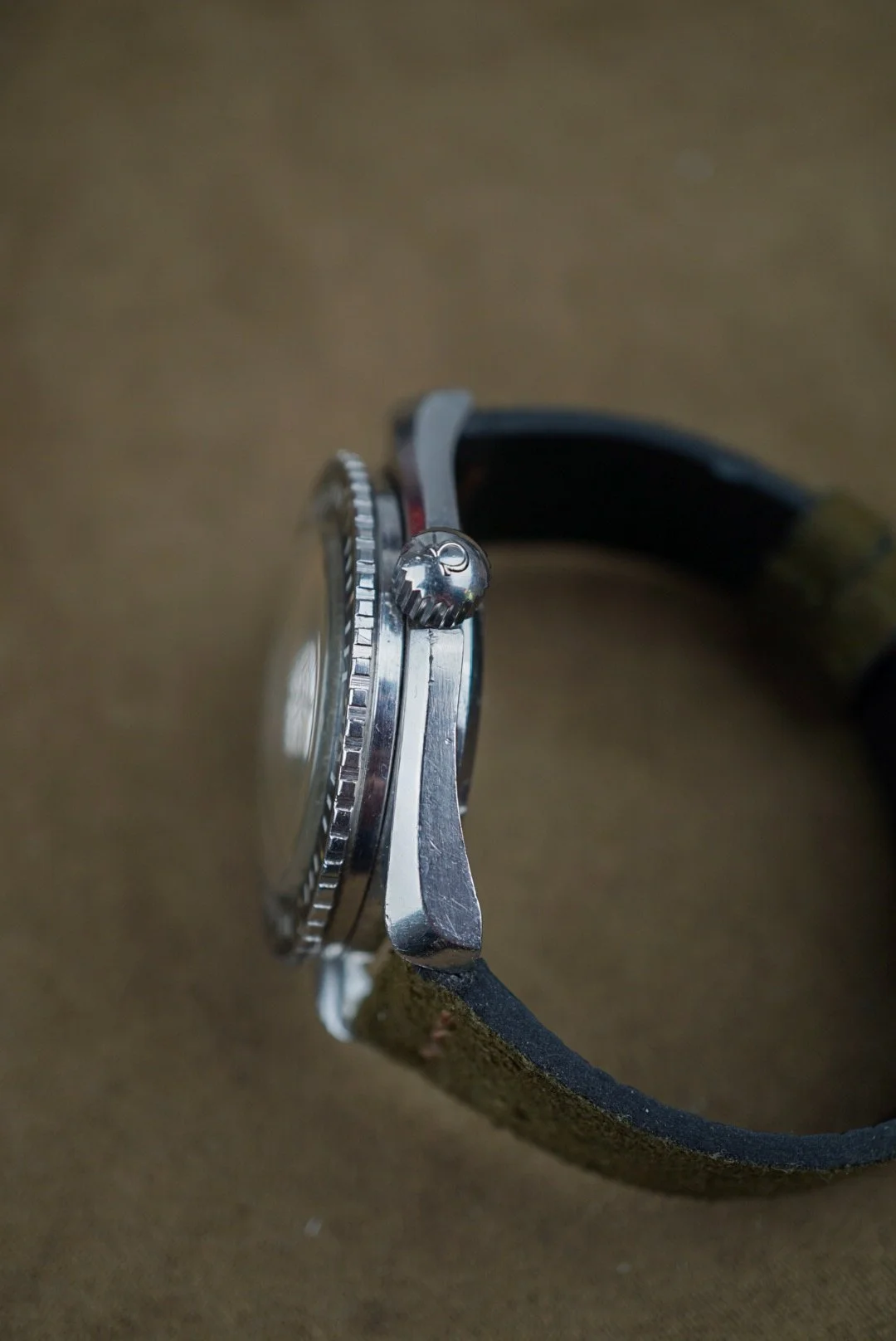
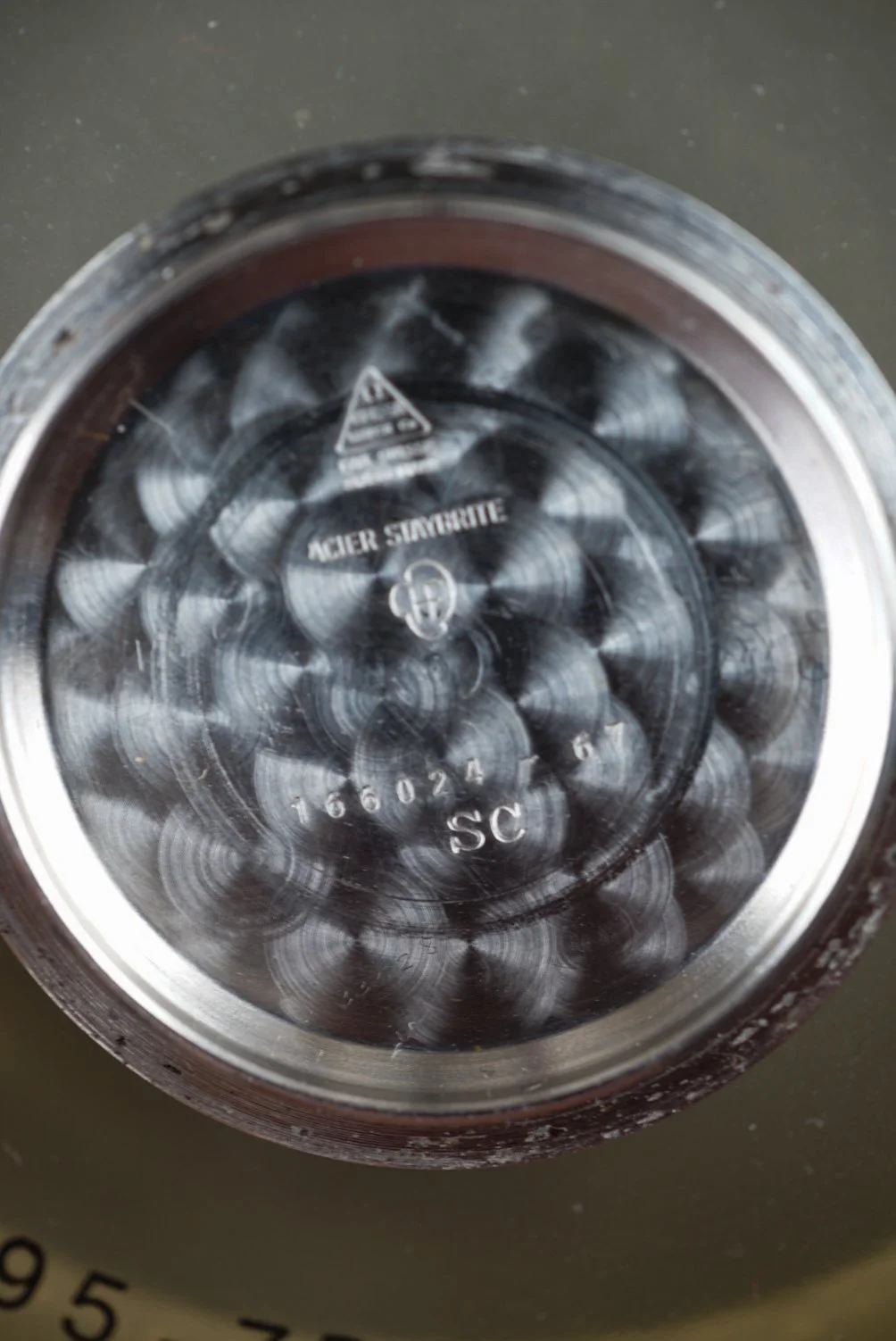
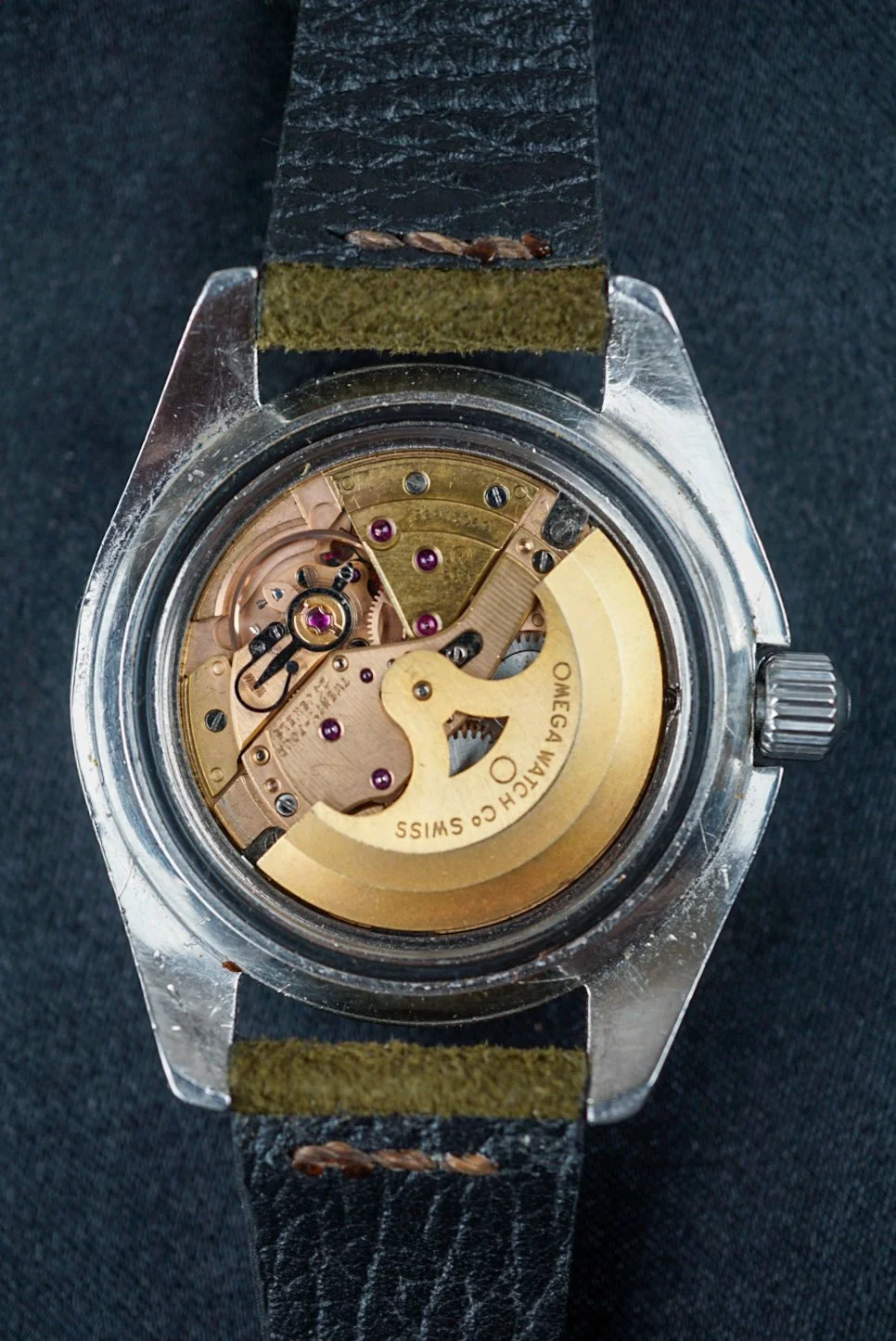
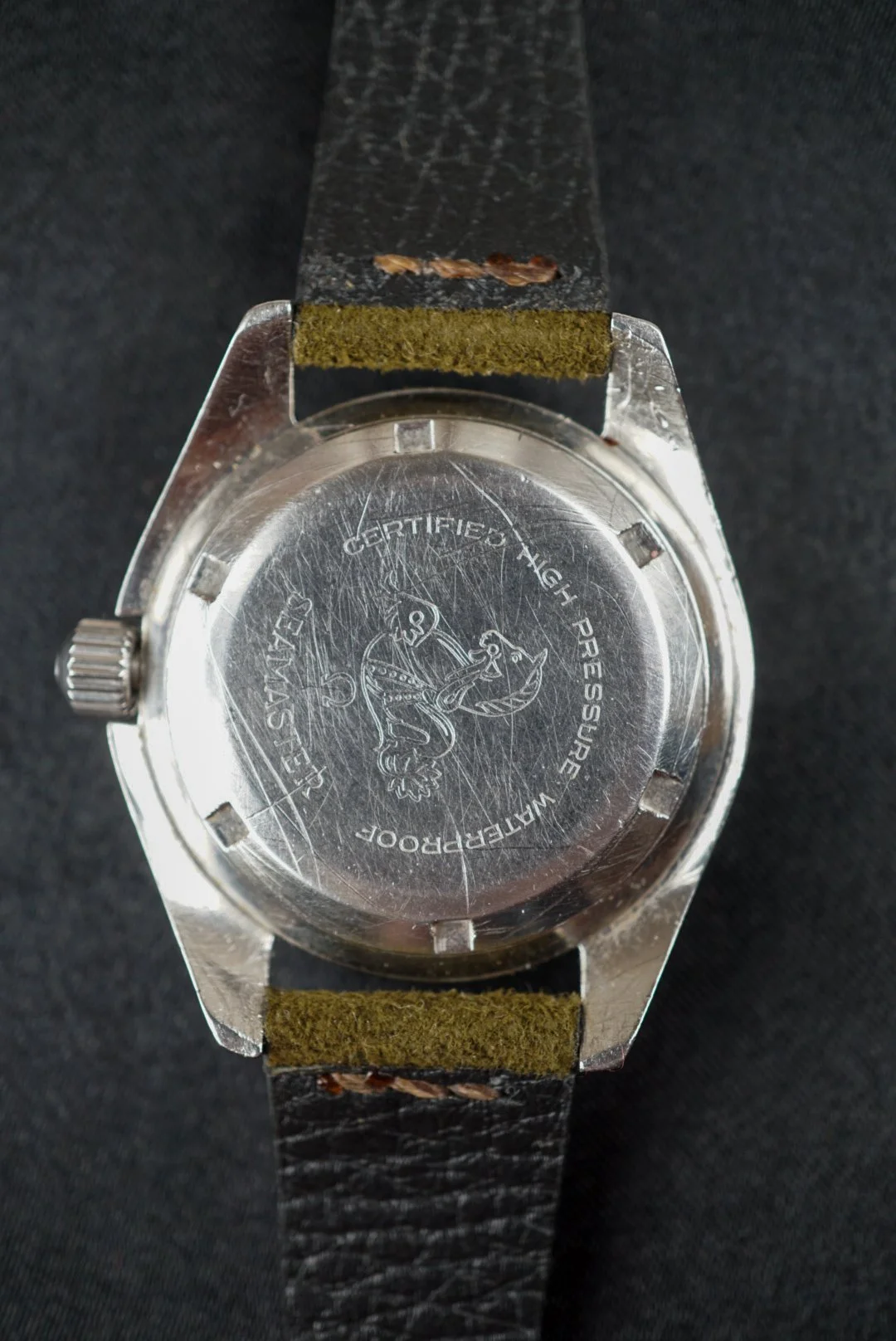
Additionally, in 2014 the Seamaster 300 line was revived, and Omega did an exceptional job bringing it back with both modern quality and a strong respect for the original design. The reissued models were remarkably close to the vintage references. In terms of size, the 39mm case is virtually identical to the originals, though now fitted with a sapphire crystal for durability and clarity. Omega also preserved the spirit of the vintage dial by keeping it matte, complemented by faux-patina luminous markers and hands that mimic the warm tritium tones found on well-preserved examples.
This re-edition offered collectors the chance to enjoy the aesthetic and charm of a 1960s Seamaster 300, but with the reliability, movement performance, and build quality of a modern Omega — a thoughtful balance between heritage and contemporary watchmaking.
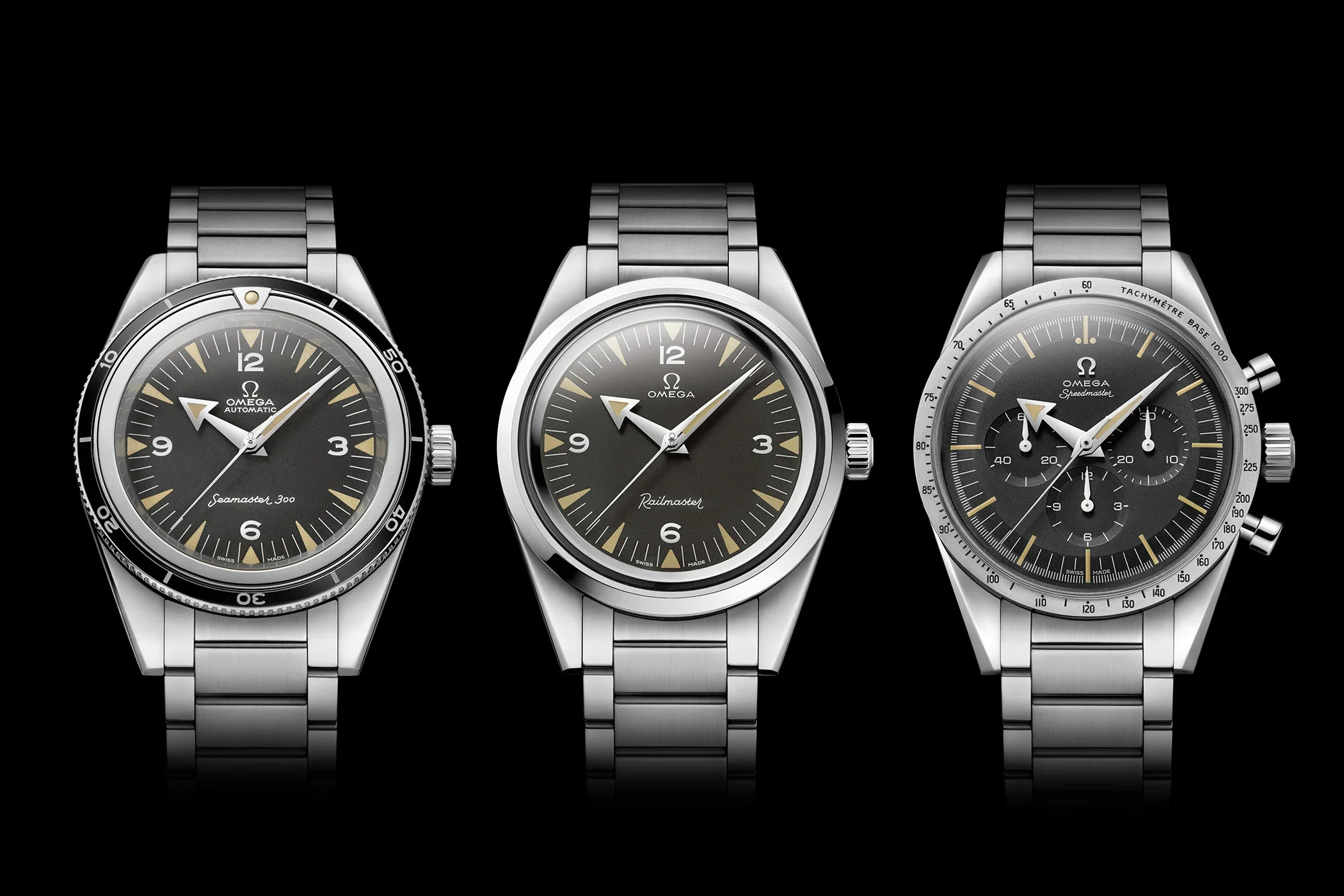
Omega Trilogy Re-Issues - Picture by Monochrome Watches
This model deserves far more attention in today’s market. It was even issued to the British Royal Navy, a testament to its reliability and functional design. For any tool-watch collector, Omega enthusiast, or diver connoisseur, the Seamaster 300 is a must-have reference. The matte dial with long triangular indices is exceptionally attractive and easy to read. Finding an all-original Seamaster 300 is increasingly difficult, as bezels and crowns were often replaced during servicing. As with Speedmasters, it’s rare to find tritium that has aged into a uniform creamy tone; most examples develop a darker or greenish patina. A consistent cream color is highly desirable and adds warmth and charm to the watch. In conclusion, the Seamaster 300 deserves more recognition and should be valued closer to other highly collected divers. The build quality is outstanding, the design is spectacular, and the movement is reliable and cost-effective to service. Our Seamaster 300 is now available on our website and includes a period-correct Tropic strap, bringing the watch even closer to how it would have been worn in the late 60s.
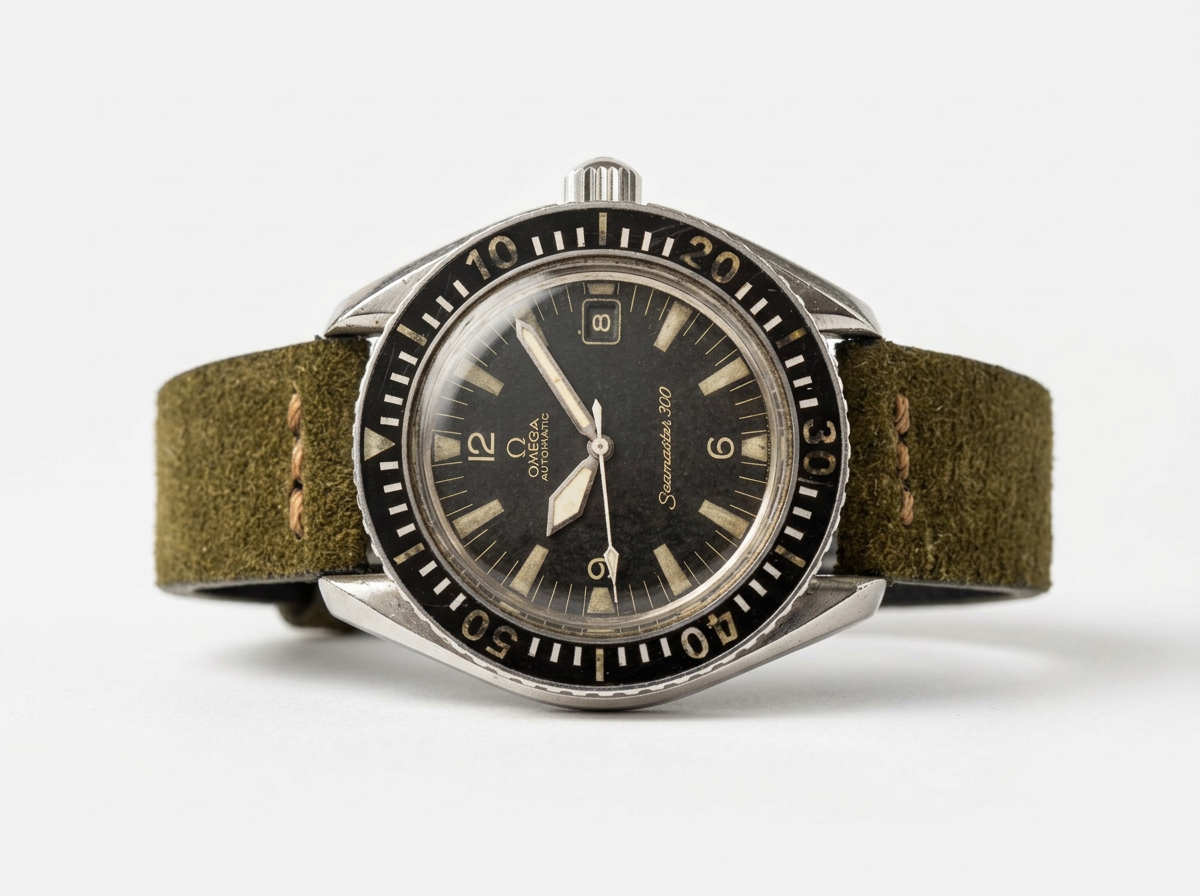
Starting the week with one of the best vintage divers out there.
This Seamaster 300 was a direct competitor to the Rolex Submariner, Aquastar, Doxa, and others. In my opinion, it’s one of the best overall designs. The Huguenin Frères case is extraordinarily well-proportioned at 41mm, featuring those beautiful twisted lugs Omega is known for. The bakelite bezel adds a special gloss that contrasts perfectly with the matte dial, while the thick sword hands make complete sense on a diver, maximizing visibility underwater.
Case & Bracelet:
The stainless steel case is unpolished, showing normal wear for its age. It is fitted with a custom leather strap and a generic buckle.
Dial & Hands:
The matte dial is in excellent condition, with no visible scratches or wear. The tritium hands have aged to a beautiful cream tone that matches the hour markers.
Guarantee:
This watch has been serviced and includes a 1-year mechanical guarantee. A timegrapher picture has been included as a courtesy.
Bibliography & Image Credits
Information and visuals used in this article were sourced with appreciation from:
Omega Seamaster 300 Historical Reference — omegaseamaster300.com
Reference Points: The Omega Seamaster 300 — Hodinkee.com
