What are the odds?
I’ve been a little inactive on the blog section of the website, as it’s been a very busy couple of weeks. Thankfully, we’ve been able to source and sell many watches — some to loyal clients and dealer friends, and others to wonderful new collectors. Nevertheless, last week we found something pretty special. More importantly, the place and the type of watches are what make this story interesting.
My favorite part of this job is the hunt — the rush of adrenaline when you’re almost certain you’ve found something worth the effort, worth the time, and simply fun. I’ve handled many “barn finds” — untouched examples discovered in the wild. Sometimes it’s just a Seiko diver; other times it’s a platinum Patek “Top Hat.” You never really know — you just have to be ready.
Last Thursday, we were making rounds in California, looking to buy watches. We’ve recently expanded our inventory to include more modern pieces, so buying activity has increased. After striking out all morning and through lunchtime, we decided to stop by a large pawn shop. There was some jewelry and mostly firearms — nothing particularly interesting. After asking to see the watches, we spotted a Speedmaster labeled “Ed White.” Surprisingly, it looked unusually clean — especially for a pawn shop piece. Without a loupe or opening the caseback, it appeared original enough: unpolished case, clearly unmolested dial, honest dirt in the bracelet and between the lugs.
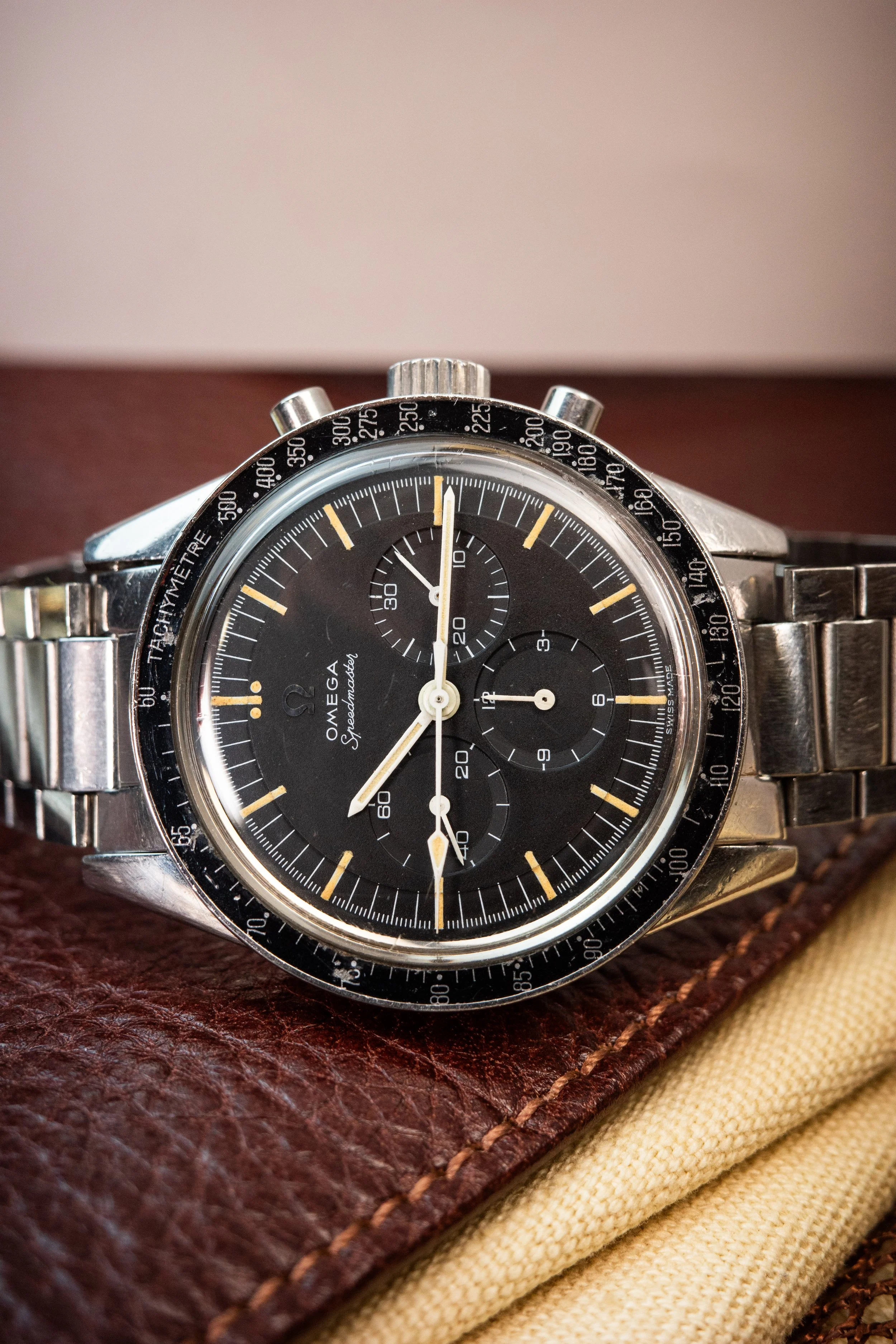
Out of nowhere, the sales associate mentioned they also had an older Explorer. I asked to see it, but she said it was already spoken for. However, the person who had reserved it had not left a deposit. I asked when it was supposed to be paid for, and she mentioned it had been due a couple of days earlier. Long story short, they told us that with cash in hand, they would consider selling both watches. After a short negotiation, we walked out with an exceptionally nice Speedmaster 105.002-62 and an early Rolex Explorer 1016.
We rushed home and carefully opened both pieces, verifying serial numbers, movements, and the small details that determine originality. Thankfully, our blind purchase was a success. What are the odds? Two highly collectible 1960s watches available at the same random pawn shop at the same time two watch dealers happened to walk in. I assume they came from the same owner, though we never received confirmation.
Diving into the Finds
First — my favorite: Omega Speedmaster 105.002-62.
This example is in stunning condition, showing even lume and a very clean black matte dial. The case appears unpolished and untouched, fitted with a fully linked 7912 bracelet showing almost no stretch. Finding an example in this condition is extremely difficult — dare I say nearly impossible?
The bracelet carries a matching 1963 clasp code, consistent with the production period. Inside the caseback is a beautiful engraving:
“George V. Eidson — From Claire — June 21, 1964.”
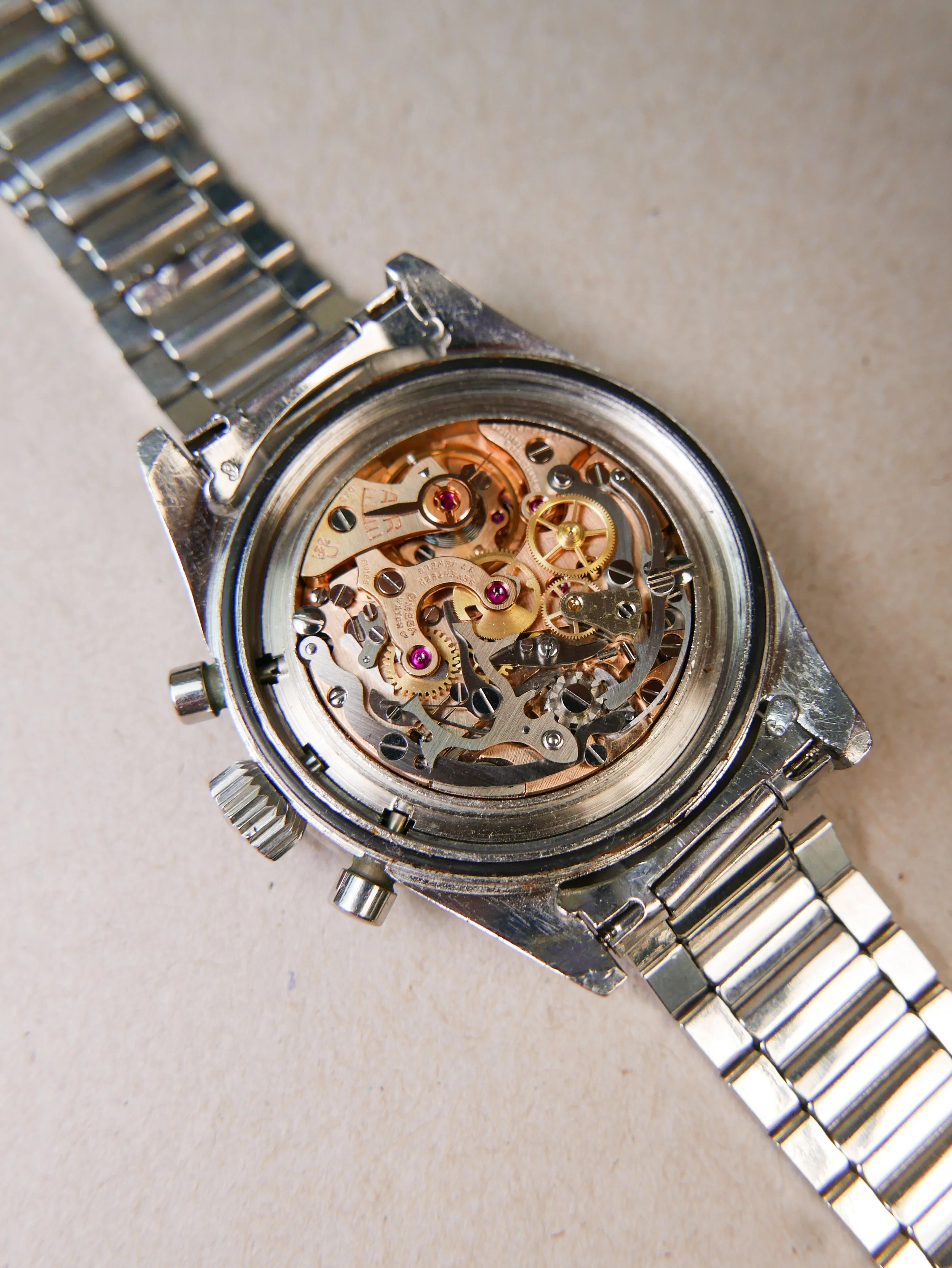
After further research, we discovered the watch belonged to the late Captain George Valentine Eidson, born January 8, 1923. He served in three wars: World War II, Korea, and Vietnam.
As noted in the San Diego Tribune in 2003:
“He entered the Navy in 1943 after graduating from the Quartermaster School in San Diego and served aboard the USS Bunker Hill (CV-17) during engagements in the South Pacific in World War II. Returning to the United States in late 1944, he was assigned to the Navy V-12 and NROTC programs and was commissioned an Ensign in 1946. In 1951, he served aboard the USS John R. Craig (DD-885) during the Korean conflict. A 1958 graduate of the U.S. Naval Intelligence School, he later served at the Pentagon in the Office of Naval Intelligence. He was also a graduate of the Armed Forces Staff College in 1964.”
He was also fortunate to love twice in his life. His first wife, Claire Carlborn Eidson — who gifted him this watch — passed away from cancer in 1985.
The second find: Rolex Explorer 1016.
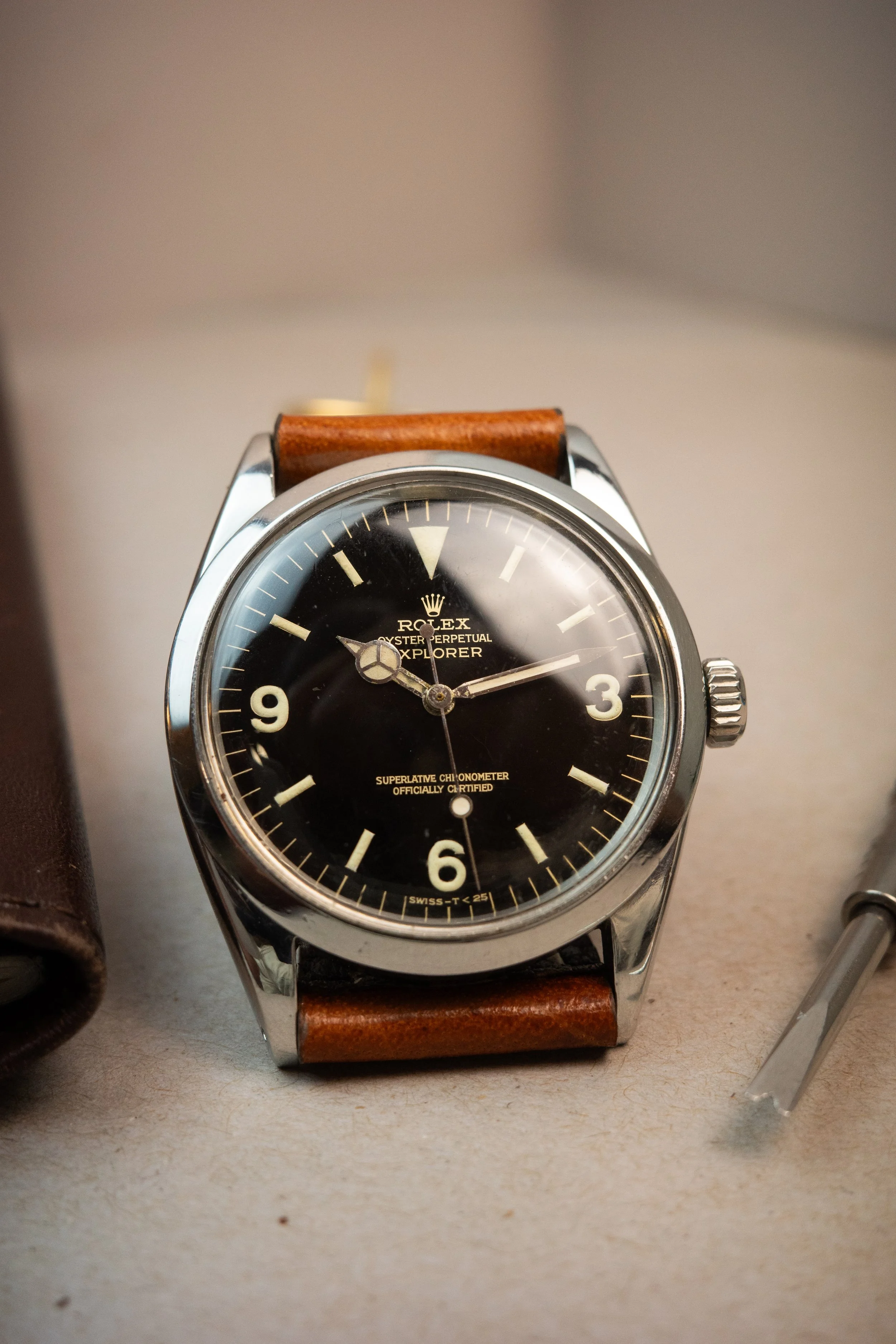
This example came head-only, but with a stunning dial. Initially, I had slight doubts, as the lume appeared slightly greener than expected for the era. I immediately recognized it as a gilt dial, but I hadn’t previously handled a zinc sulfide Explorer in person.
At the time of inspection, we didn’t have access to our loupes or portable UV light. After consulting a friend, he confirmed that the dial lume was zinc sulfide — a material found on a specific serial range of Rolex watches. I had seen zinc sulfide on Submariners and GMTs before, but never on an Explorer I.
Moments like this remind me why provenance matters. The Speedmaster is not just a well-preserved 105.002-62 — it is a watch that accompanied a man who served his country across three wars, a gift from Claire to George in 1964, carrying both history and sentiment within its caseback. And what are the odds? Two highly collectible 1960s icons, resting quietly in the same pawn shop, waiting to be discovered on an ordinary Thursday. In this business, skill matters — but sometimes, just sometimes, timing and luck align in ways that remind you why the hunt is everything.
